Beyond clicks
AAP tracks recommendation events, not just browser journeys and affiliate links.
Learn moreAAP is the protocol layer for recording agent recommendations, matching later conversions, and creating cleaner attribution across merchants, agents, and platforms.
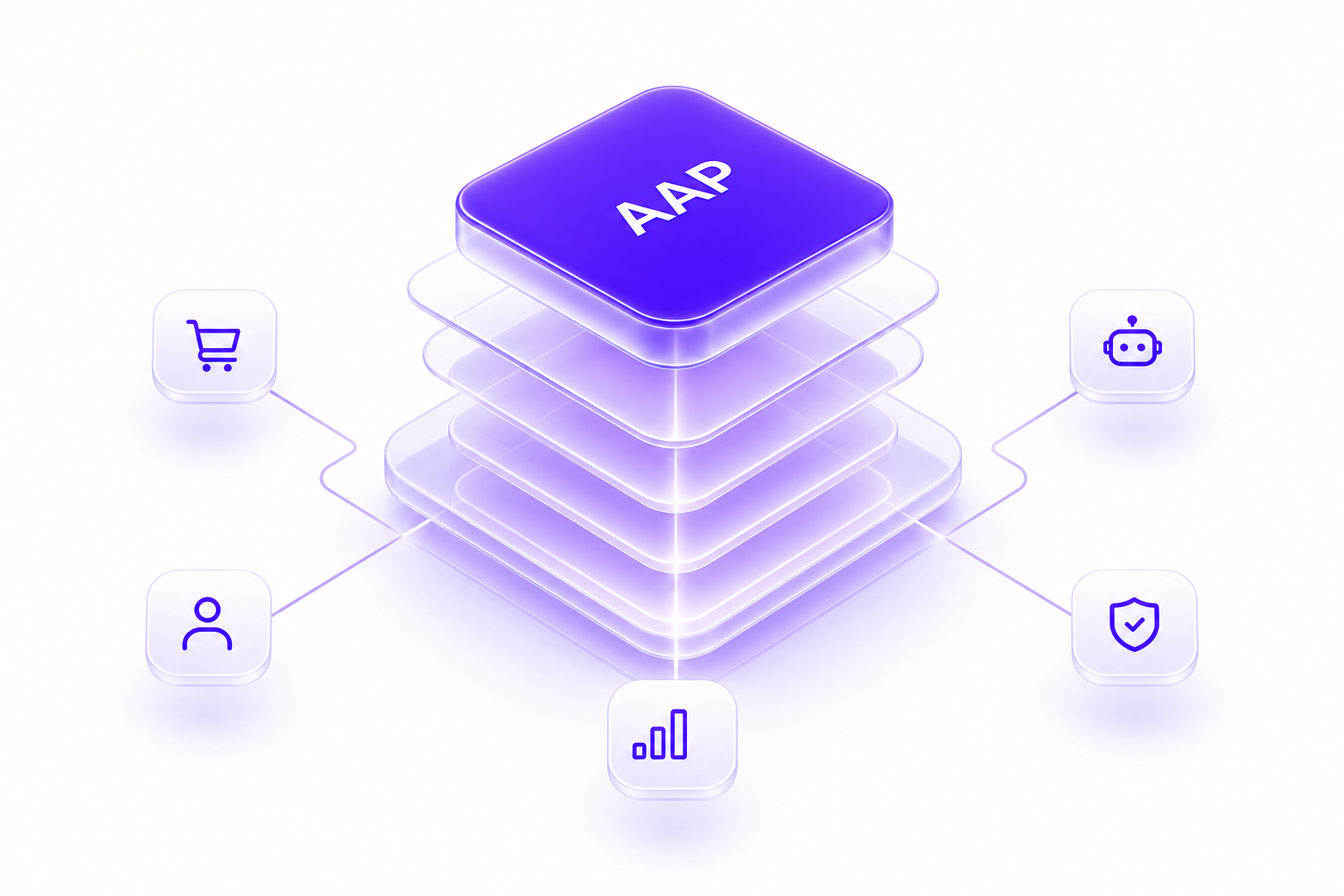
AAP tracks recommendation events, not just browser journeys and affiliate links.
Learn moreLater conversions can be matched back to earlier recommendations through a shared protocol layer.
Learn moreAttribution is native to agent-native commerce, not retrofitted browser tracking.
Learn moreAffiliate infrastructure was built for cookies, clicks, and browser sessions. Agents operate differently.
AI agents do not click affiliate links or browse on cookies, simply reaching goals intentionally.
An agent can influence a purchase without creating a traditional click path that merchants can verify later.
User may research with agents and buy later, on another device, or through another touchpoint.
AAP gives merchants and agents a cleaner shared system for attribution, verification, and payout logic.
AAP records recommendation events when an agent surfaces an offer, creating a verifiable record of agent involvement.
Each event can be matched back to a later conversion regardless of device, browser, or session, using a trustworthy attribution path.
The protocol gives merchants, agents, and platforms a common attribution layer instead of fragmented reporting.
The protocol keeps a clear record from recommendation event to later conversion, without depending on old affiliate assumptions.
A recommendation event is recorded with AAP, including protocol-level record of the agent, offer, and context.
When a sale happens, the merchant reports the conversion and AAP matches it back to the originating recommendation.
The protocol provides a clean shared record so attribution is more transparent and payout decisions are easier to trust.
Example: recommendation.event
{
  "event_type": "recommendation",
  "agent_id": "agent_xyz123",
  "merchant_id": "mrc_987",
  "offer_id": "offer_abc123",
  "user_token": "u_9f2h6e",
  "timestamp": "2026-05-24T12:45:00Z",
  "signature": "aap_sig_..."
}
Example: conversion.event
{
  "event_type": "conversion",
  "order_id": "ord_3e42f1",
  "merchant_id": "mrc_987",
  "amount": "149.00",
  "timestamp": "2026-05-27T15:08:21Z",
  "attribution_id": "attr_...",
  "verified": true
}AAP is not just a merchant tool or an agent tool. It is a shared layer for the whole commerce stack.
Reach buyers through agents with clearer attribution and a cleaner path to paying for outcomes backed by the configured evidence level.
Learn moreGet credit for valuable recommendations, even when the purchase does not happen through a traditional affiliate journey.
Learn moreBuild trust with verifiable attribution standards across merchants, agents, and commerce channels.
Learn moreCreate a new attributable layer that platforms, agents, merchants, and new tools can build on.
Learn moreIf you are building an agent platform, merchant integration, or attribution-aware commerce tool, AAP gives you the infrastructure layer underneath it.